Your Audience Doesn't Watch This Keynote.
They Play It.
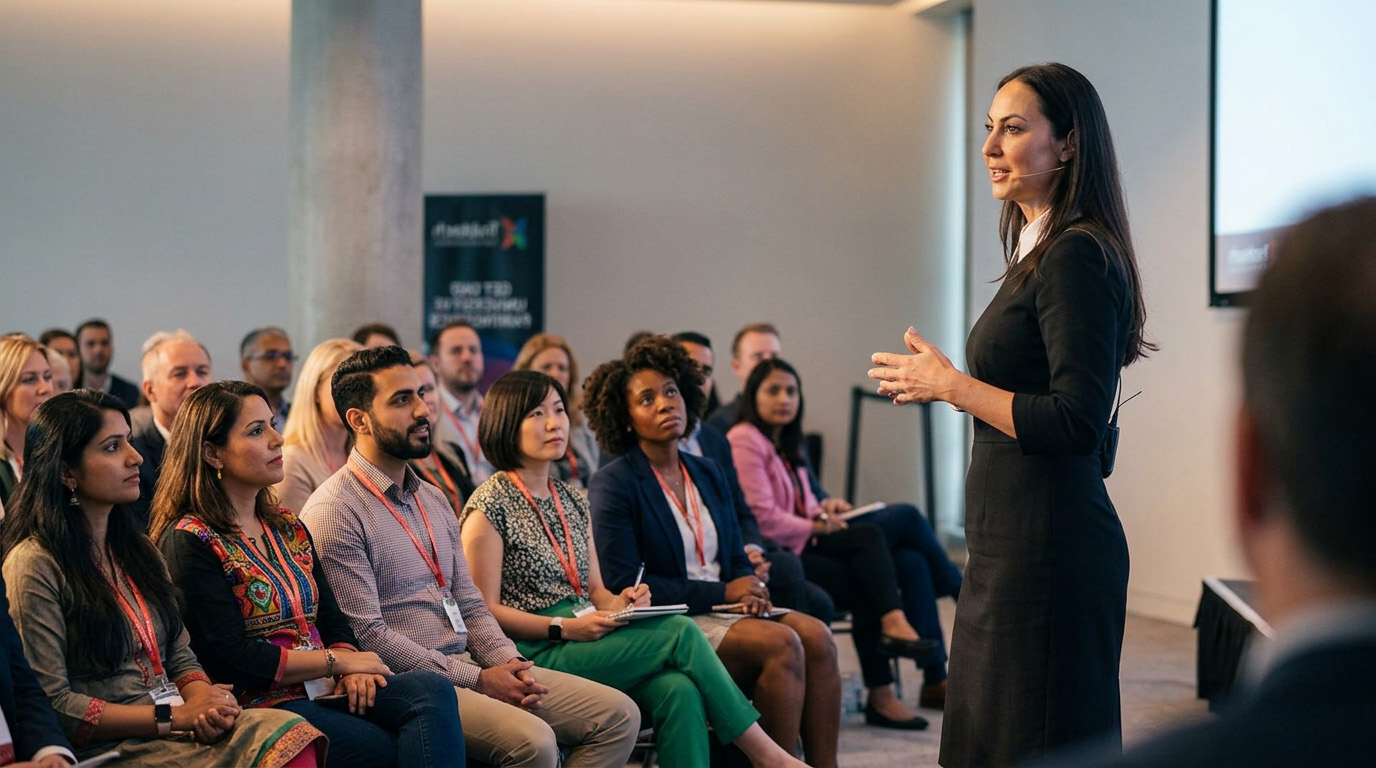
Your people sit through talks all year. They nod, they clap, and by Monday nothing has changed, because nobody ever practiced. So Tara turns the keynote into a game. Volunteers come up on stage, the room splits into squads, the objections come off a wheel on the big screen, and every person in the seats scores the round. The whole audience trains the skill while they are still in the room.
Not a talk they sat through. A round they played.
Five Rounds.
Everyone Plays.
The same format Tara runs at ConvoDojo LIVE, sized to your stage and your clock.
The Six Reasons
Every "no" your people hear comes from one of six places: Money, Trust, Timing, Ego, Fear of Change, or Third-Party Approval. Tara teaches the room to hear which one is talking. Ten minutes, and every person in the seats has the lens for the rest of the session.
The whole room · paddles upSpin the Objection
A gold wheel spins on the big screen and lands on a real objection. A volunteer comes up, Tara plays the buyer, and the volunteer has seconds to answer with a question instead of a pitch. The room votes with paddles: did they find the real reason, or did they flatline?
Volunteers on stage · room scoresSays / Means
Tara reads what a prospect says out loud, in the tone they say it. The room calls out what they actually mean. It is the loudest round of the day, and it trains the skill no slide can teach: hearing what the other person did not say.
The whole room · call it outSquads and the Scoreboard
The room splits into squads. Each squad sends a player up, the clock runs, and points land on a live scoreboard on the screen. Now the people in the seats are coaching their teammate, which means they are thinking through the answer too.
Teams · live scoreboardThe Kumite
The top player from each squad comes back for the final. Harder objections, less time, the whole room watching. The winner takes the prize, and everyone leaves having seen the system work under real pressure, from people they know.
Finalists on stage · room decidesThey Didn't Hear About the Skill.
They Used It.
A first rep under pressure.
The hardest rep is the first one. Your people took it in the room, with an audience, so the next one on a real call feels smaller.
A shared language.
After the session, your team says "that's a timing no" or "that's third-party" out loud. The six reasons become how they talk about deals.
A question before a pitch.
The game rewards one move: ask before you answer. By the final round, the room is doing it without being told.
Energy that lasts past lunch.
A room that is playing does not check its phone. The session lifts the whole event, including the speaker who goes on after.
Stories they repeat.
People remember the colleague who nailed the Kumite. They retell it, and the lesson travels with the story.
A drill they can run again.
Every round is simple enough for a manager to rerun at the next team meeting, so the session becomes a habit, not a memory.
Which of these would your room feel first?
Built for Your Stage
and Your Clock.
Every format runs the same system. The difference is how many rounds your audience plays.
Keynote Workshop
A keynote with a game inside it. The six reasons, then volunteers on stage and the whole room scoring. Built for a general session or a kickoff.
Breakout Workshop
The full five rounds, squads and scoreboard included. Built for breakout rooms where people came to practice, not just to listen.
Half-Day Intensive
More rounds, harder objections, and real scenarios from your industry. For teams that want the reps to stick. Need more than a day? See on-site training.
Any Room Where People
Have to Talk Someone Into Something.
Sales Kickoffs
Start the year with reps instead of slides. The scoreboard does the motivating.
Sales Conferences
The session people talk about at the cocktail hour, because they were in it.
Podcast and Creator Events
Better guests, better sponsors, better sales calls. Every pitch a creator makes is a conversation they can control.
Association Conferences
A breakout that fills up and stays full, because the room is the content.
Leadership Summits
Managers play the rounds, then run them with their own teams the following week.
Company All-Hands
Every department has a "no" to handle. The game works for the whole company, not just sales.
Questions Event Planners
Usually Ask
Will people feel put on the spot?
No one comes on stage who did not raise a hand. The room plays from their seats with paddles, and squads win or lose together, so nobody stands alone. The volunteers usually end up being the people the room cheers for loudest.
Does the audience need sales experience?
No. The six reasons work in any conversation where someone says no: a client, a sponsor, a boss, a family member. Tara tailors the scenarios to your audience before the event.
What do you need from the venue?
A screen and projector, a handheld mic for volunteers, and a little open space at the front of the stage. Tara brings the game: the wheel, the cards, the timer and the scoreboard all run from her laptop, and she brings the paddles.
Can we give every attendee a copy of the book?
Yes. The workshop is built on Questions Close Deals, and planners often order a copy for every seat so the room takes the system home. Any of the seven titles, shipped to one address ahead of the event. Purchase orders welcome.
Get Books for Your Audience →Can we book a traditional keynote instead?
Yes. Tara also delivers four keynotes and three sales talks in a classic format. See the keynotes, or book the 20-minute call and she will help you pick the right one for your room.

Tara did not start in a boardroom. She started in a gymnasium, as a competitive Level 9 gymnast and then a coach. She learned early that nobody gets better by watching. You get better by doing the rep, getting corrected, and doing it again.
She brought that into sales, built a system closing more than $50 million in deals, and wrote it into seven books starting with Questions Close Deals. The Keynote Workshop is how she coaches a whole room at once.
Your Audience Has Heard Enough Talks.
When Do They Get to Play?
Book a 20-minute call. Tell Tara about your room, your stage and your clock, and she will build the rounds around it.
20-minute inquiry call · Rounds built for your audience · Tara responds personally